DDQ TUE 2020-09-22 @ 12:45 PM
13. Processing: Reflective, Behavioral, Visceral
13.1. Agenda
General Announcements
CSCI 4800H/6800 Paper Presentations begin THU 2020-10-15.
Term Project: Milestone 2: Definition & Related Work
Activity
13.2. Activity
Duration: \(\sim\) 5-10 minutes
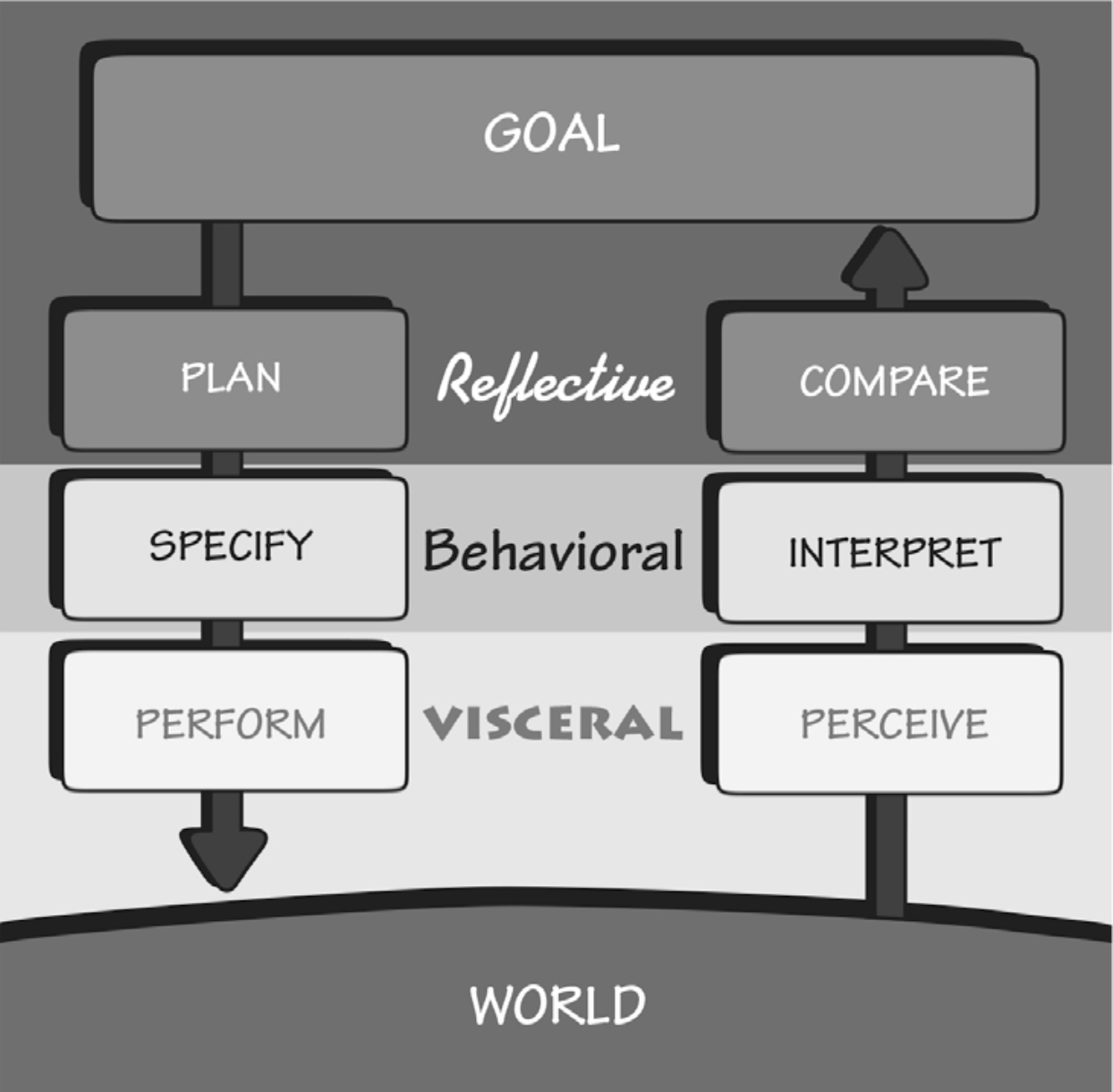
In a prior discussion, we discussed the Seven Stages of Action, an explanatory theory and theoretical framework for human-computer interaction. Each stage in that theoretical framework can be mapped to one of three levels of cogntive and emotional processing: visceral, behavioral, and reflective.
- three levels of processing
Part of Norman’s theory, the three levels of processing are visceral, behavioral, and reflective; they provide an approximate model of human cognition and emotion. [Book:2]
- visceral level
The lowest level of cognitive and emotional processing in Norman’s theory, including the control of simple muscles and sensing the state of the world and body. [Book:2].
Engineers and other logical people tend to dismiss the visceral response as irrelevant. Engineers are proud of the inherent quality of their work and dismayed when inferior products sell better “just because they look better.”
—Don Norman
- behavioral level
The middle level of cognitive and emotional processing in Norman’s theory, including learned skills. It’s sensitive to the expectations of the action sequence and interpretations of the feedback. [Book:2].
- reflective level
the highest level of cognitive and emotional processing in Norman’s theory, including conscious cognition, goals, task planning, and our evaluations of what actually happened. [Book:2].
- flow
An emotional state that accompanies complete immersion into an activity.
All three levels of processing work together to determine a person’s cognitive and emotional state. High-level reflective cognition can trigger lower-level emotions. Lower-level emotions can trigger higher-level reflective cognition.
—Don Norman
In Fig. 13.1, we see the Seven Stages of Action mapped to each of the three levels of processing.
13.2.1. Breakout Rooms
Duration: \(\sim\) 15-20 minutes
Quick introductions, if needed.
As a group, respond to the following in a followup discussion here.
Depending on your Breakout Room number (visible near the top of Zoom when no one is screen sharing), you should respond to one of these:
- Groups / Rooms 1, 4, 7 (Visceral):
According to Norman, the visceral responses that are important for designers pertain to users’ immediate perceptions of a design. Discuss notable situations and tasks that were so good or bad that each of you remember or acknowledge your visceral response to it. Describe at least one good example and one bad example among those discussed, and provide pictures or illustrations, if possible (and appropriate), to help others understand your examples.
- Groups / Rooms 2, 5, 8 (Behavioral):
According to Norman, the most critical aspect of the behavorial level for designers is that every action be associated with an expectation. In general, it’s good when user expectations are met and bad when they’re not; however, the precise classification can differ depending on if a mismatch between expectation and interpretation leads to learning. Discuss notable situations and tasks that were so good or bad that each of you remember or acknowledge your behavioal response to it. Describe at least one good example and one bad example, and provide pictures or illustrations, if possible (and appropriate), to help others understand your examples.
- Groups / Rooms 3, 6, 9 (Reflective):
According to Norman, reflection is cognitive, deep, and slow, and it’s where users evaluate circumstances, actions, and outcomes, often assessing blame or responsibility. Discuss notable situations and tasks that were so good or bad that each of you remember or acknowledge your reflective response to it. Did you accept or assign responsibility for the success or failure of an action? Did the action cause you to feel guilt or pride? Describe at least one good example and one bad example, and provide pictures or illustrations, if possible (and appropriate), to help others understand your examples.
Make sure all group / room members are listed in your followup discussion post.
Pick a group representative. This person will briefly share your group’s conceptual model to the class. No pressure, seriously!
Respond to other followup discussions until the breakout rooms end.
13.2.2. Back in Class
Duration: \(\sim\) 20 minutes
When asked, all group representatives should type
repinto chat.The instructor may ask group representatives to present by name or simply ask that they present in the order they’re listed in chat.